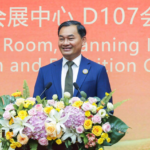


The third round of negotiations on Cambodia’s minimum wage for 2027 ended on Friday with worker representatives maintaining proposed increases of $15.3 and $40.6, while employer representatives maintained the current $210 monthly wage, Minister of Labour and Vocational Training Heng Sour said.
The negotiations aim to determine the minimum wage for workers in the textile, garment, footwear, travel goods and bags sectors for 2027.
Speaking to reporters after the third tripartite meeting of the fourth-mandate National Council for Minimum Wage, held at the Ministry of Labour and Vocational Training on Friday afternoon, Heng Sour, who is also chairman of the council, said eight meetings had so far been held as part of the wage-setting process.
These comprised three tripartite meetings, one bilateral meeting between worker and employer representatives, three internal meetings of worker representatives and one internal meeting of employer representatives.

During Friday’s meeting, representatives of workers and employers continued to present their respective positions and supporting arguments, while government representatives facilitated the discussions and provided further explanations on the social and economic criteria used to determine the minimum wage.
Heng Sour said most worker representatives maintained their proposed increase of $15.3, which would bring the monthly minimum wage to $225.3, while some maintained a proposed increase of $40.6, bringing the wage to $250.6.
Employer representatives maintained the existing minimum wage of $210 per month.
The parties agreed to resume tripartite negotiations on the morning of Monday, September 28, in line with the schedule announced on September 1.
The current minimum wage for workers in the covered sectors is $210 per month in 2026.
In addition to the minimum wage, workers receive various benefits, including attendance bonuses, transportation and accommodation allowances, seniority bonuses, meal allowances for overtime work and overtime pay.
Workers who are members of the National Social Security Fund (NSSF) are also entitled to benefits including healthcare, occupational accident coverage and pension benefit