
Wuliangye, China’s second-largest liquor producer, is a household name. But Yibin, the lower-tier city in Sichuan province home to the famous baijiu maker, has long flown under the radar.
So when I received an invitation earlier this month for a media trip to Yibin, the first question that sprang to mind was: where exactly is it?
Tucked away behind the hills of western China, we had to fly to Chengdu, Sichuan’s capital, followed by a bus transfer. And when we finally arrived, local officials were keen to show us everything the city had to offer – except the liquor.
“Wuliangye is old-fashioned,” local cadres said.
What followed was a tour of a prefecture-level city trying hard to redefine itself: from a sleepy backwater into a manufacturing hub, with many of the costs typically associated with breakneck development.
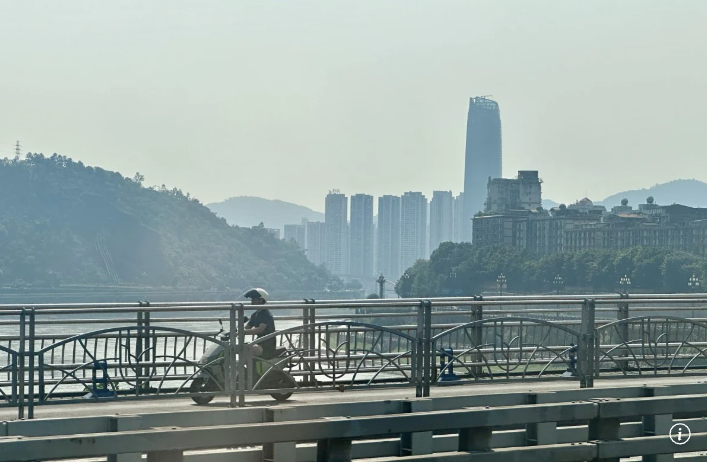
One of the first things that caught our eye was a 288-metre (about 944 feet), 57-storey skyscraper rising from a prime waterfront plot with sweeping vistas of the Yangtze River. The building, one of the tallest in Sichuan, is expected to house the province’s first five-star Westin hotel in 2027 after its developer signed a contract with America’s Marriott International.
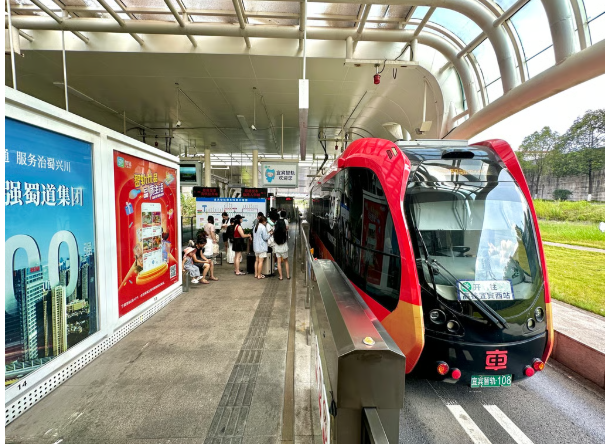
If the idea sounds like a marketing gimmick, CRRC was eager to prove otherwise, as executives bragged about orders from South Korea and Malaysia. They let us board one of the 20-metre vehicles, where signs in Malay and English validated its destination. Set to be shipped to Kuching, Malaysia, the buses will serve main routes in a public transport network backed by the Sarawak state government.
Other ART buses are expected to head to Daejeon in South Korea, while CRRC and Yibin’s city government hope the vehicles can enter Hong Kong after the company took part in a tender for a rapid transport system in Kai Tak.
The arrival of companies like CRRC and CATL has helped lift Yibin’s economy. Since 2023, its gross domestic product has shot to third among Sichuan’s 21 prefecture-level cities.
Only on the final day of the trip did we finally get the chance to taste Wuliangye. To our surprise, the version served was lighter and more refreshing than expected, with reduced alcohol content.
Today, Wuliangye derives less than half of its revenue from liquor, and the company has substantial stakes in businesses such as Sichuan Airlines and Bank of Sichuan.
Yet despite diversifying, Yibin’s wider transformation is far from straightforward. Like many lower-tier cities in central and western China eager to carve out new growth niches, it still faces long-standing constraints.
The city is by no means rich, with many residents and sectors lagging as manufacturing rises. Average per capita annual disposable income was 36,690 yuan (US$5,459) in 2025, or 3,057 yuan a month, about 15 per cent lower than the national average. Retail sales fell 1.5 per cent year on year in 2025.
Local government finances also show signs of strain. Fiscal income growth slowed sharply from 25.6 per cent in 2021 to 3 per cent in 2025, with the city recording a deficit of 50 billion yuan (US$7.44 billion) last year. Total government debt stood at 160 billion yuan.
Like many other Chinese localities, Yibin is also ageing before it becomes rich. The number of newborns has fallen 37 per cent over the past decade, from 58,000 in 2015 to 36,000 in 2025, while a fifth of the population is now aged 60 or above.
For first-time visitors, anecdotal evidence also points to tepid sales despite the influx of investors and enterprises. The hotel where we stayed, managed by the UK’s IHG Hotels & Resorts, offered laundry services only every other day. Reception staff cited “inadequate guests”.
International mass-market brands have also faced headwinds. Starbucks and McDonald’s have shut some stores in Yibin, in line with their strategy to concentrate sales in more affluent coastal areas. Young people continue to shun local jobs and flock to Chengdu and coastal cities.
Still, local officials told us that economic development would, hopefully, address the city’s problems.
“Yibin remains a small city and is never short of problems … which can only be solved through economic growth. At least our GDP is growing,” one local official said.