


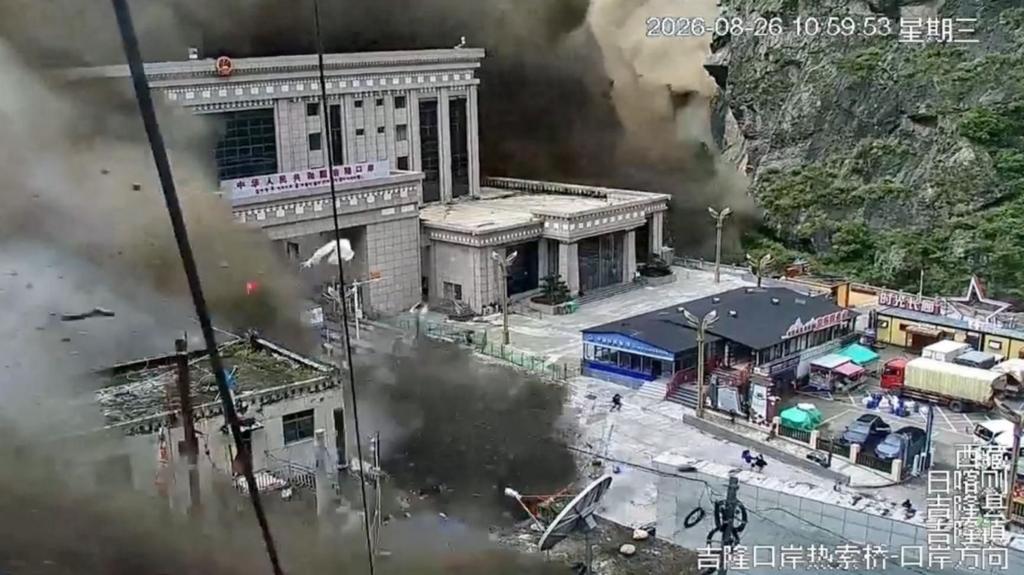
Whenever there is a flood like this in the Himalayas, one question that comes up spontaneously is: what caused it?
And the problem often is there is no definitive answer instantly. The difficult terrain of the Himalayas including in Tibet, where some say the flood originated, and where there is hardly any human presence, is the main reason.
Experts therefore try to analyse satellite images, but monsoon clouds have not been so helpful this time, they say.
Officials with Nepal’s department of meteorology and hydrology, however, have told me that some images they have seen show a massive chunk of ice (perhaps a part of a glacier) that seems to have collapsed from a mountain in the Tibetan side, bringing down rocks and other sediments with them.
That, they say, may have generated some volume of water because of the friction between the rocks and ice when they were falling down. The remaining debris of rocks and sediments created a dam on the Lhende river below, obstructing its flow initially but ultimately causing it to breach.
Some Nepali academics in China say they have been given similar accounts by some Chinese experts. But the Chinese news agency Xinhua in a post on X has called it a mudslide in Nepal.
Earlier, there were also suspicions of a collapse of a glacial lake but some glaciologists are ruling that out.
The real reason will be known once clear satellite images are obtained and verified by multiple sources.