
Workers and companies in Japan are grappling with the effects of a globally crippling outage that has struck Microsoft 365 and its widely used apps Outlook, Teams and AI software Copilot.
On Friday morning, as employees in Japan prepared for their working day, many were met with error screens, and faced rescheduling meetings and disruptions to their work.

Cambodia and Rwanda signed three cooperation agreements yesterday to expand bilateral trade, investment, tourism and air connectivity, positioning both nations as strategic gateways to Asian and African markets.
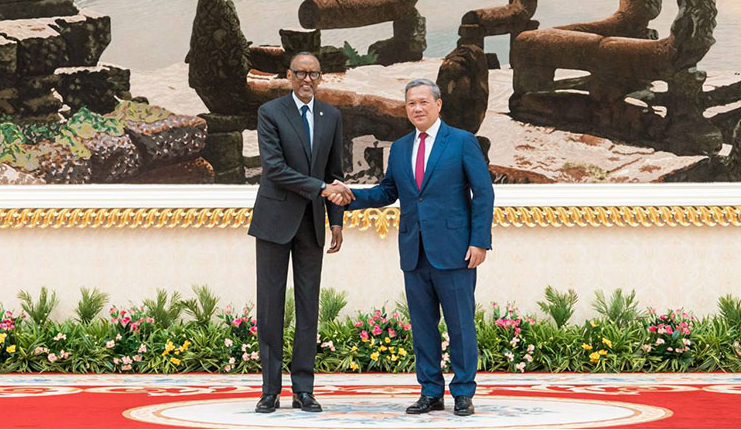
The pacts were witnessed by Prime Minister Hun Manet and Rwandan President Paul Kagame following bilateral talks at the Peace Palace in Phnom Penh, held during Kagame’s state visit to Cambodia and participation in the 20th Francophonie Summit.
During the meeting, Mr Hun Manet and Kagame underscored the complementary strengths of their economies, agreeing to leverage Rwanda as a regional entry point for Cambodian exports into Africa and Cambodia as a hub for Rwandan businesses accessing ASEAN and wider Asian markets.
The three agreements signed following the talks comprise a memorandum of understanding (MoU) between the Council for the Development of Cambodia (CDC) and the Rwanda Development Board (RDB) to promote investment, an MoU on tourism cooperation and a bilateral air services agreement to boost transport links.
Kagame pledged to deepen ties in trade, tourism and sectors of mutual interest. He commended Cambodia’s economic transformation since the Khmer Rouge era, noting that his visit and the Francophonie Summit inject fresh momentum into bilateral relations.
Mr Hun Manet welcomed the Rwandan delegation and expressed satisfaction with the steady progress in diplomatic and commercial cooperation, agreeing to maintain high-level exchanges to turn diplomatic goodwill into tangible business partnerships.
Beyond economic cooperation, the two leaders discussed tackling transnational crime and technology-enabled scams. They also pledged closer coordination within multilateral forums, including the United Nations, the Non-Aligned Movement and the International Organisation of La Francophonie.